

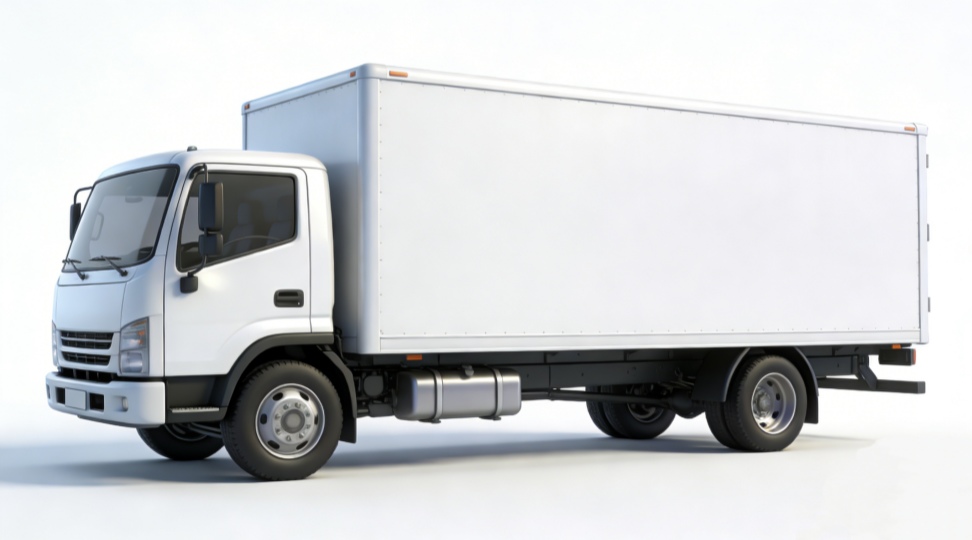
En logística, un camión recto (también llamado camión de caja o furgón cúbico) es un vehículo monobloque cuya cabina y caja de carga comparten un mismo chasis rígido. En otras palabras, todos los ejes y el espacio de carga están unidos al mismo chasis. Esto se refiere al camión recto, lo que significa que, a diferencia de un tractocamión, el área de carga no se puede separar. Para una definición clara de camión recto, piense en una camioneta de mudanzas donde la cabina del conductor y la caja de carga rectangular forman una estructura continua. Este diseño da nombre a los camiones rectos y los diferencia de los camiones articulados. Los camiones rectos son comunes para el transporte de mercancías como artículos para el hogar, electrodomésticos o entregas minoristas.
No todos los camiones rectos son iguales. Vienen en varios tamaños y configuraciones, cada uno diseñado para tareas específicas. Comprender los tipos de camiones rectos disponibles le ayudará a seleccionar el que mejor se adapte a sus necesidades de carga.
Principalmente, clasificamos los camiones rectos según su Peso Bruto Vehicular (GVWR), que es el peso operativo máximo del vehículo. A continuación, se detallan los tipos comunes de camiones rectos:
| Clase de camión recto | Rango GVWR | Nombres comunes y características | Usos primarios |
|---|---|---|---|
| Clase 3 | 10,001 – 14,000 libras | Furgoneta grande / Camión de caja pequeña | Pequeñas empresas, reparto de paquetes y transporte minorista ligero. |
| Clase 4 | 14.001 – 16.000 libras | Furgoneta de servicio pesado / Amplio espacio de almacenamiento | Entrega de muebles, distribución de bebidas embotelladas. |
| Clase 5 | 16.001 – 19.500 libras | Camión recto convencional | Entregas locales grandes, servicios de mudanzas y cargas con peso moderado. |
| Clase 6 | 19,501 – 26,000 libras | Camión de servicio mediano / Eje único | Transporte intrarregional, distribución mayorista y mudanzas de mayor envergadura. |
| Clase 7 | 26.001 – 33.000 libras | Camión recto de servicio pesado | Camiones de bebidas, recogida de basura, mercancías con peso/volumen significativo. |
Más allá de las categorías de peso, el tipo de cuerpo es un diferenciador clave. Los tipos de cuerpo más comunes incluyen:
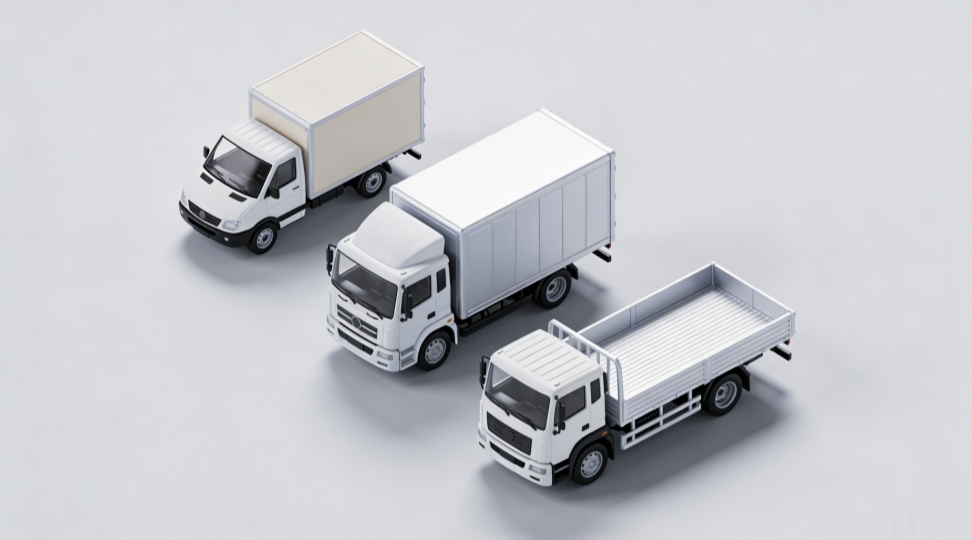
Camiones de caja (Camiones secos):El tipo más reconocible, con una caja de carga rectangular y cerrada. Protegen la carga de las inclemencias del tiempo y son ideales para mercancía general.
Camiones rectos de plataforma plana:Equipados con una plataforma abierta y plana, son perfectos para transportar materiales de construcción, maquinaria o cualquier carga que sea de gran tamaño o necesite cargarse desde los lados/arriba.
Camiones refrigerados rectos (camiones “reefer”):Se trata de camiones con caja y unidades frigoríficas integradas, imprescindibles para transportar mercancías perecederas como alimentos y productos farmacéuticos.
Camiones con plataforma de estacas:Con rieles laterales (estacas) alrededor de una plataforma plana, ofrecen versatilidad para la construcción y el transporte agrícola.
Los camiones rectos transportan una amplia gama de mercancías. La carga típica incluye:
Mercancía general: Productos de consumo envasados, electrodomésticos, electrónica, muebles y artículos minoristas. Los camiones rectos suelen atender entregas minoristas y envíos de carga fraccionada (LTL), donde la carga cabe en la carrocería del camión.
Alimentos y productos farmacéuticos: Abarrotes, alimentos congelados/refrigerados, bebidas y suministros médicos. Los camiones refrigerados transportan productos perecederos o sensibles a la temperatura (frutas, helados, medicamentos, vacunas) a tiendas y hospitales.
Materiales de construcción e industriales: Madera, vigas de acero, piezas de maquinaria, suministros de plomería y calefacción, y materiales de construcción. Por ejemplo, los camiones de plataforma o volquete suelen transportar ladrillos, cemento, paneles de yeso o maquinaria pesada en las obras.
Carga a granel y especializada: Combustible, aceites o productos químicos en camiones cisterna (camiones cisterna más pequeños), así como cargas de residuos y reciclaje. Algunos camiones de recolección de residuos (camiones de basura o de vacío) también son camiones cisterna. Las cargas pesadas, como las entregas de vehículos (transportadores de automóviles), a veces pueden transportarse en camiones de una sola unidad.
En resumen, los camiones rectos son más adecuados para cargas útiles de tamaño moderado y entregas locales o regionales. Suelen transportar carga general y bienes de consumo, así como cargas específicas de la industria (materiales de construcción, alimentos, líquidos) que se adaptan a su caja o carrocerías especializadas.
Los camiones rectos varían en tamaño, pero las dimensiones típicas son:
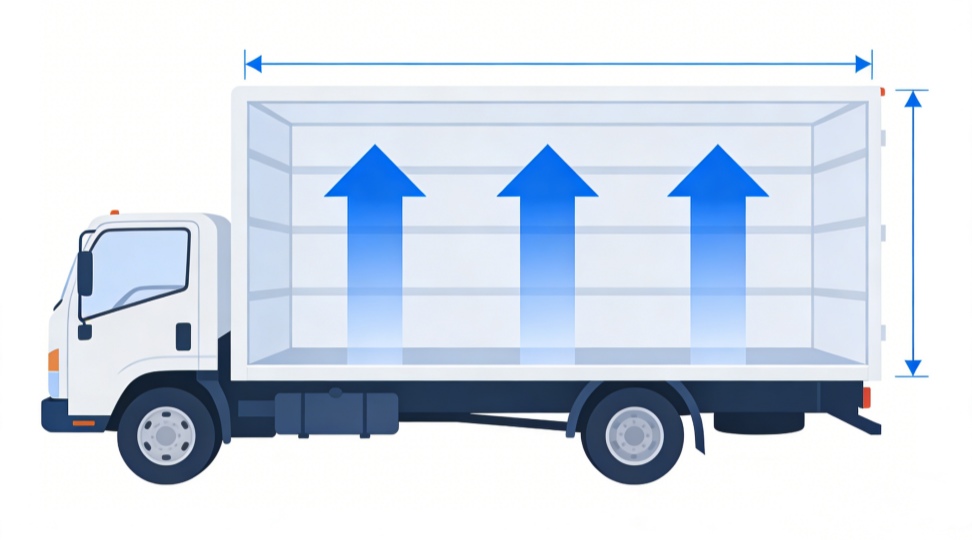
Longitud: La mayoría de los camiones rectos de 2 ejes miden entre 4,5 y 7,3 metros de largo. Los modelos más grandes de 3 ejes pueden ser más largos, en algunos lugares hasta 12 a 18 metros en total, aunque en muchas regiones los camiones rectos estándar tienen un límite de alrededor de 8 metros. Como señala una fuente, un camión recto estándar mide aproximadamente 8 metros de largo.
Ancho: Generalmente, de 1.8 a 2.6 metros de ancho. Muchos camiones rectos se construyen justo por debajo del límite de ancho legal (aproximadamente 2.6 metros) para maximizar el espacio de carga. Los camiones rectos más pequeños pueden ser más estrechos (aproximadamente 1.8 a 2.1 metros) para maniobras urbanas.
Altura: Generalmente, la altura es de 2,4 a 3 metros sobre el suelo. Esto permite una amplia caja de carga que cabe debajo de puentes y puertas de almacén. Algunos modelos de techo alto pueden superar los 3 metros, pero la mayoría se encuentra en el rango de 2,4 a 3 metros.
Peso (GVWR): Las clasificaciones de peso bruto vehicular suelen oscilar entre 10 000 y 33 000 libras (aproximadamente de 4,5 a 15 toneladas métricas). Un camión de clase 7, por ejemplo, tiene una clasificación de hasta 33 000 libras.
En la práctica, un camión de caja mediana puede tener unos 6 metros de largo, 2,4 metros de ancho y 2,7 metros de alto. Las dimensiones pueden variar según el modelo y la normativa local, pero los rangos anteriores cubren la mayoría de los camiones rectos utilizados en el transporte de mercancías.
Los camiones rectos ofrecen varias ventajas, especialmente para entregas regionales y urbanas:
Eficiencia de costos: Un camión de bastidor simple tiene menos piezas móviles que un camión articulado. Este diseño más sencillo se traduce en menores costos de adquisición y mantenimiento. Un análisis indica que los camiones de bastidor simple tienen menores gastos iniciales y necesidades de mantenimiento gracias a su carrocería fija y mínima complejidad mecánica. Operar un camión de bastidor simple suele costar menos en combustible y seguro que un tractocamión más grande de capacidad similar.
Operaciones rápidas: Con la cabina y la caja integradas, los conductores pueden cargar y descargar sin perder tiempo enganchando o desenganchando remolques. Esta entrega más rápida mejora la velocidad.
Maniobrabilidad: Los camiones rectos suelen ser más cortos y compactos que los semirremolques. Su agilidad es una gran ventaja para la conducción urbana. La maniobrabilidad es su característica principal. Pueden acceder a calles estrechas, zonas urbanas concurridas y muelles de carga estrechos que los remolques más grandes no pueden transitar. Esto los hace ideales para entregas de última milla y rutas suburbanas.
Versatilidad: Un camión rígido puede desempeñar diversas funciones, desde la entrega de muebles hasta el transporte de alimentos y el transporte de equipos, con solo cambiar su tipo de carrocería. Actúan como almacenes móviles sobre ruedas. Por ejemplo, la carrocería integrada "puede funcionar como un almacén móvil", reduciendo los pasos de manipulación. Esta versatilidad significa que una flota de camiones rígidos puede manejar una amplia variedad de cargas a la vez.
Licencia y Logística: Por lo general, operar un camión convencional solo requiere una licencia de conducir de servicio mediano (por ejemplo, la CDL Clase B en EE. UU.). Esto es más sencillo que las licencias más estrictas para semirremolques pesados. La menor regulación se traduce en una asignación más rápida de conductores y menores costos laborales.
En general, las ventajas de los camiones rectos incluyen menores costos totales, un mantenimiento más sencillo, entregas más rápidas y mejor accesibilidad en entornos urbanos. Para las empresas que transportan mercancías a nivel local o regional, estos factores hacen de los camiones rectos una opción práctica.
| Característica | Camión recto (camión rígido) | Camión tractor (semirremolque) |
|---|---|---|
| Chasis | Bastidor único y continuo: cabina y caja de carga en un solo chasis | Dos partes: cabeza tractora + remolque desmontable mediante quinta rueda |
| Capacidad de carga | Cargas moderadas (comúnmente hasta ~33,000 lbs GVW, Clase 7) | Cargas muy grandes (a menudo hasta 80 000+ libras de peso bruto vehicular, clase 8) |
| Uso típico | Entregas de corta y media distancia, rutas urbanas y suburbanas | Carga de larga distancia y carga pesada/a granel (interestatal o internacional) |
| Maniobrabilidad | Alto: mejor en espacios reducidos y calles de la ciudad. | Inferior: radio de giro más amplio, necesita rampas y carriles más grandes |
| Enganche de remolque | Sin remolque: área de carga fija al bastidor | Equipado con una quinta rueda para acoplar/desacoplar remolques. |
| Licencia de conducir | Por lo general, una licencia para un solo vehículo (por ejemplo, Clase B) | Requiere una licencia de vehículo combinado (por ejemplo, Clase A) |
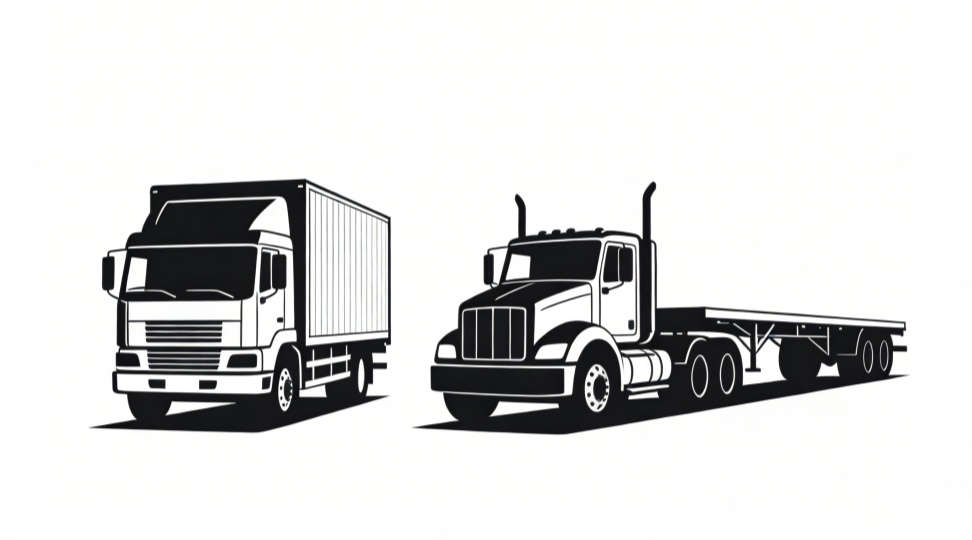
En resumen, la diferencia entre un camión tractor y un camión recto radica en su construcción y capacidad. Un camión tractor (semirremolque) está diseñado para remolcar remolques separados y puede transportar carga mucho más pesada y de mayor longitud. Un camión recto transporta toda la carga en su propia carrocería, lo que limita su carga útil, pero le otorga mayor flexibilidad para recorridos más cortos. Los semirremolques dominan los transportes de gran volumen y larga distancia, mientras que los camiones rectos destacan en distancias más cortas, cargas mixtas o entregas urbanas.
Para empresas que necesitan un transporte de mercancías confiable, especialmente en Europa y Asia, DR Trans Utilizamos camiones directos como parte de una solución logística integral. Nuestro equipo ayuda a cada cliente a resolver desafíos complejos de envío eligiendo los vehículos y métodos adecuados. Ya sea organizando una entrega urbana urgente o integrando camiones directos en una cadena multimodal, aportamos experiencia profesional a cada envío.
En DR Trans, nos encargamos de todos los detalles: planificación de rutas, aduanas, programación y selección de vehículos. Los camiones de carga directa suelen ser clave en nuestras redes de distribución europeas, ofreciendo un servicio de última milla rápido y flexible. Al utilizar el camión de carga directa más eficiente para la carga y el destino, garantizamos un transporte fluido de la mercancía. Nuestro objetivo es ofrecer siempre a nuestros clientes los métodos de transporte más profesionales, convirtiendo los problemas logísticos en soluciones fiables.
En resumen, los camiones rígidos (o camiones rectos) son vehículos de carga de servicio mediano con un bastidor sólido que conecta la cabina y la carga. Están disponibles en diversos tipos (caja, plataforma, refrigerados, etc.) y transportan una variedad de productos, desde productos de consumo hasta materiales de construcción. Sus ventajas incluyen ahorro de costes, maniobrabilidad y simplicidad operativa. Para las empresas que transportan mercancías, especialmente aquellas que se dirigen a los mercados europeos, comprender los camiones rígidos es esencial. DR Trans está preparada para aplicar esta experiencia: ayuda a cada cliente a elegir las soluciones de camiones rígidos adecuadas para entregas puntuales y eficientes.

 IPv6 RED SOPORTADA